Hazards Are Wack - The Music Video
Lifesaving Rules
Our Lifesaving Rules form the foundation of our commitment to a strong safety culture. We all have a responsibility to take ownership of our personal safety as well as the shared responsibility of the safety of others. The following rules apply as a measure to ensure you and your fellow teammates are not seriously injured or worse. These rules apply at all job sites with a zero-tolerance policy for deviation.
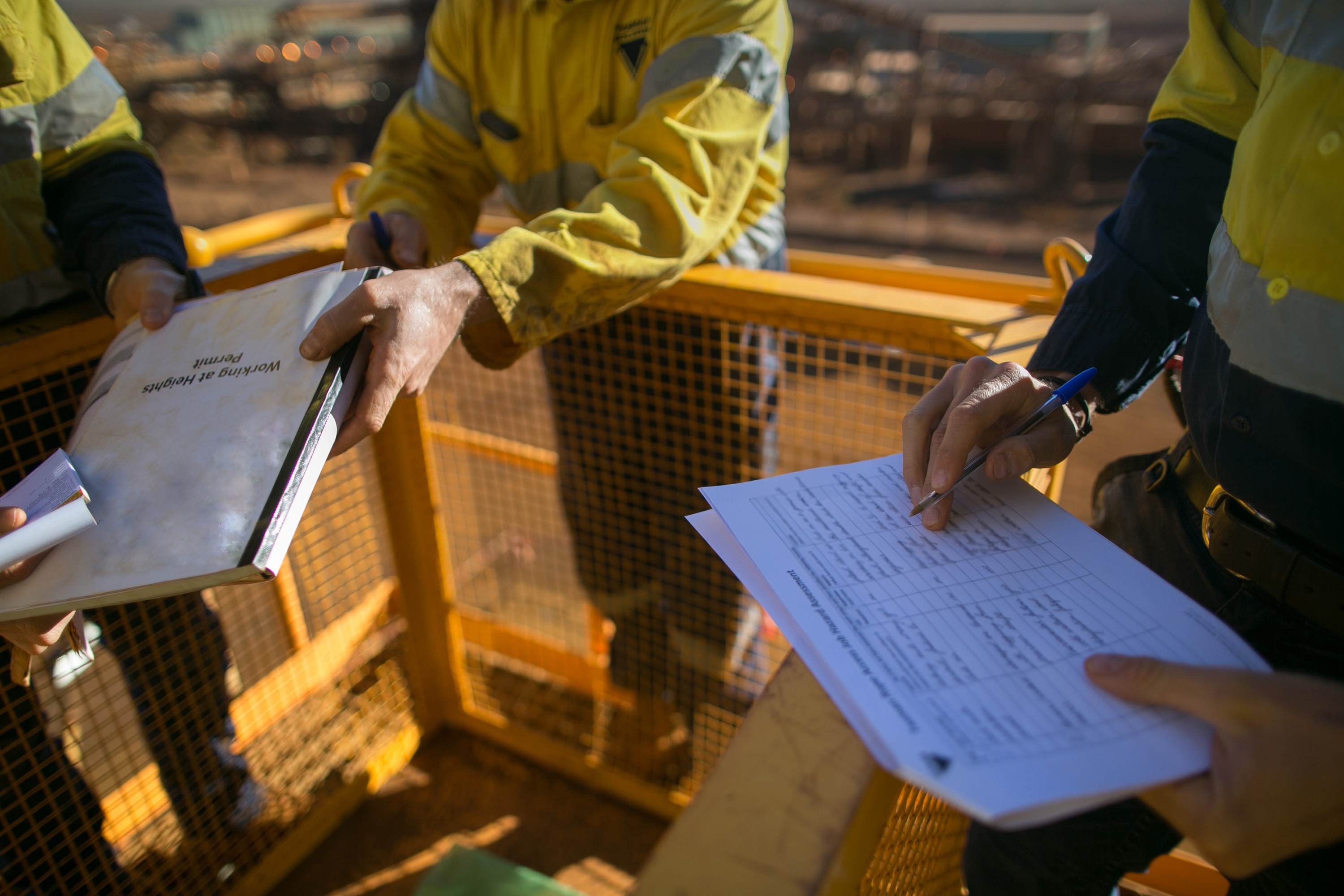
- 100% tie off is required at ALL times when working at heights of 6’ elevation or greater, unless other protections, such as permanent guardrails, are in place.
- Always obtain authorization before entering a permit required confined space.
- Never walk under suspended loads.
- Always work with a valid work permit when required.
- Always wear a seatbelt when operating equipment or driving on public roads.
- Working under the influence of alcohol or illegal substances is prohibited.
- Never perform work on a system that is not locked out/tagged out and verified zero energy.
- Never enter an open trench, ditch or excavation that is greater than 4’ without authorization from competent person.
- Never dig without making a “One Call.”
- Never operate any equipment unless you have been qualified and have a valid H+M operator card.
- Never conduct EHW covered work without proper approval and authorization.
Extra Hazardous Work Program
At H+M Industrial EPC, we understand the importance of evaluating safety risks and quality control standards to create a safe work environment. Our Extra Hazardous Work (EHW) program is designed for early detection and communication of work hazards in various construction environments, including commissioning, confined spaces, electrical, and lifting. The EHW checklist is instrumental in identifying hazardous work in the estimating/proposal phase to create safe work plans.
Further, the job safety analysis regularly conducted by H+M crews at job sites ensures ongoing safety risk evaluations to identify extra hazardous work and develop mitigation strategies. With annual training on our EHW program, we make sure that our employees are well-equipped to identify workplace hazards, develop safe work plans, and maintain consistent communication about job safety guidelines with the construction crew.
Examples of Potential Extra Hazardous Work
- Commissioning (such as pigging or dewatering activities)
- Confined Spaces
- Demolition
- Electrical (such as working within overhead electrical lines)
- Energy Isolation (such as lock-out-tag-out or hot taps)
- Environment (such as asbestos exposure, the need for acid suits, or lower oxygen levels)
- Falls (such as working over water or the need for suspended scaffolds)
- Flammables & Hot Work
- Critical Lifting (such as the use of cranes)